

1. Home
  2. Blog
  3. The Best Book On Management According To Business Experts

The Best Book On Management According To Business Experts

Sezin GökSezin Gök
September 20, 2022
Updated: February 25, 2024
12 min read
The Best Book On Management According To Business Experts
Loading...

If you're looking for the best book on management, you won't find a more comprehensive or authoritative source than business experts. In this blog post, we'll share some of their favorite books on the topic and explain why they're so valuable. Whether you're a seasoned manager or just starting out in your career, these books can help you learn invaluable skills and techniques to help you succeed. So without further ado, let's get started!

The best book on management in the world

There are many books on management available, but which one is the best? The answer to that question may vary depending on who you ask, but there is one book that consistently ranks as the top management resource. Written by Jim Collins and published in 2001, "Good to Great" has been cited by business leaders and executives all over the world as being highly influential in their approach to managing their organizations. If you're looking for a comprehensive guide to effective management, this book is a must-read.

1. The Lean Startup: How Today’s Entrepreneurs Use Continuous Innovation to Create Radically Successful Businesses 

The term “lean startup” was coined by Eric Ries in his 2011 book of the same name. A lean startup is a new type of business that approaches product development in a completely different way. Unlike traditional businesses, which focus on making a product and then selling it, a lean startup focuses on creating a minimum viable product (MVP) and then using customer feedback to improve upon it. 

The goal of a lean startup is to shorten the amount of time it takes to bring a product to market by using customer feedback to validate or invalidate assumptions about the product. This approach allows startups to fail fast and learn from their mistakes so that they can pivoted and iterated as needed. 

Why the Lean Startup Approach Works

The lean startup approach has been incredibly successful for many startups because it allows them to validate their ideas quickly and efficiently. In the past, businesses would spend years developing a product only to find out that there was no market for it. With the lean startup approach, businesses can create an MVP in a matter of weeks or even days and then use customer feedback to improve upon it. 

Not only does this approach save startups time and money, but it also allows them to get their products into the hands of customers faster. This is important because it allows startups to gather data about how customers are actually using their products so that they can make educated decisions about what features to add or remove. 


  • Create Your Personal Development Plan for 2023

  • Opting Out: Procrastination and its Costs

  • Understanding the Importance of Grasp in Everyday Life

  • The Hidden Gems: Unearthing the Source of Wisdom


How to Implement a Lean Startup Approach

If you’re interested in implementing a lean startup approach for your own business, there are a few things you need to do. First, you need to come up with an MVP. This doesn’t have to be a complete product; it just needs to be something that you can put in front of customers so that they can provide feedback. 

Once you have your MVP, you need to create a feedback loop so that you can collect data from customers and use it to improve your product. There are a few different ways you can do this, but one of the most popular methods is through beta testing. Beta testing involves giving your MVP to a group of users and asking them for feedback. This feedback can be used to make changes to your product before it’s released to the general public. 

The lean startup approach has revolutionized the way startups develop products. By focusing on customer feedback and iteration, startups are able to bring their products to market much faster than traditional businesses. If you’re interested in implementing a lean startup approach for your own business, start by coming up with an MVP and then creating a feedback loop so that you can collect data from customers and use it to improve your product.

2. First Things First: To Do List for Living 

First Things First is a book by Dr. Stephen R. Covey, published in 1996. The book is a self-help guide that teaches readers how to Prioritize their time and focus on the things that are most important to them. The book starts with the premise that many people 's lives are out of balance because they are not clear about what is really important to them. It then goes on to provide guidelines for setting priorities and creating a personal mission statement. The book has been praised for its simple but effective approach to time management, and it has helped many people to refocus their lives on what is most important to them.

Related Course: Time Management Course Free

3. The Innovator’s Dilemma: When New Technologies Cause Great Firms to Fail 

The Innovator's Dilemma is a classic business book that explore why large, successful companies often fail when new technologies emerge. The author, Clayton Christensen, uses case studies to examine how incumbent firms struggle to respond to disruptive innovations. He argues that the key reason for this is that these companies are too focused on meeting the needs of their existing customers. As a result, they fail to invest in the new technology until it is too late. The book is essential reading for anyone interested in innovation and how companies can successfully navigate change. While it is now over 20 years old, the book's insights remain highly relevant in today's rapidly changing business landscape.

4. Pay It Forward: How One Simple Idea Can Change Your Life and Maybe Even the World

In Trevor Mundel's book, "Pay It Forward: How One Simple Idea Can Change Your Life and Maybe Even the World", he explores the concept of goodwill and how it can change people's lives. The idea is simple: do something nice for someone, and instead of paying them back, have them "pay it forward" by doing something nice for someone else. For example, if someone does your grocery shopping for you, instead of returning the favor, you could pay it forward by taking your neighbor's dog for a walk.

Mundel argues that this chain of goodwill can have a profound impact on society as a whole. He cites examples of people who have used this concept to make a difference in their communities, and challenges readers to do the same. Whether we're helping out a friend or stranger, Mundel reminds us that even the smallest act of kindness can make a world of difference.

5. The 5 Kinetic Rules of Creative Leadership

Related Course: Leadership Training Course

Leaders must have the ability to think creatively in order to solve problems and develop new ideas. Unfortunately, many leaders lack the creativity needed to succeed in today's rapidly changing world. In his book The 5 Kinetic Rules of Creative Leadership, author Timattery shows leaders how to tap into their creative potential.

The book provides readers with practical advice on how to overcome creative blocks, generate new ideas, and implement change. In addition, Timattery offers valuable insights on how to create a culture of innovation within an organization. By following the advice in this book, leaders can learn how to unleash their creativity and create lasting change.

6. Creativity, Inc.: Overcoming the Unseen Forces That Stand in the Way of True Inspiration

In his book Creativity, Inc., author Ed Catmull explores the various ways that companies can stifle creativity and prevent employees from reaching their full potential. One of the most important lessons from the book is that businesses need to create an environment where it is safe to take risks and fail. Too often, companies reward conformity and penalize employees for thinking outside the box.

As a result, innovation is stifled and employees become afraid to speak up or suggest new ideas. By creating a culture of openness and respect, businesses can encourage employees to be more creative and innovative. In addition, businesses need to give employees the freedom to experiment and take risks. Only by creating an environment where creativity can flourish will businesses be able to achieve true greatness.

7. Originals: How Non-Conformists Move the World

In his book Originals, Adam Grant explores the value of non-conformity and how it can lead to positive change. Grant draws on a wealth of research to show that non-conformists are often the ones who come up with new ideas and drive progress. He argues that society needs more people who are willing to take risks and challenge the status quo.

While many people strive to conform in order to fit in, Grant urges readers to think for themselves and question why things are done a certain way. He provides numerous examples of how non-conformists have made a lasting impact on the world, and he offers advice on how we can all foster a culture of innovation. By showing us the power of non-conformity, Grant gives us the courage to be our own originals.

8. Give and Take: Why Helping Others Drives Our Success

In his book Give and Take: Why Helping Others Drives Our Success, Dr. Adam Grant argues that altruism is not only morally commendable, but it is also essential for achieving success. Dr. Grant gives numerous examples of how helping others has led to success in various fields, from business to medicine to the arts. He also debunks the myth that successful people are necessarily selfish and ruthless, showing that many of history's most successful people have been those who were generous with their time, talents, and resources.

What sets Dr. Grant's book apart from other works on success is his focus on the importance of helping others. In a world where too often the pursuit of success seems to be a zero-sum game, Dr. Grant's message is both timely and important. As he shows, when we help others, we not only make the world a better place, but we also set ourselves up for success.

9. Deep Work: Rules for Focused Success in a Distracted World

In his book Deep Work, Cal Newport lays out a case for why focus is essential to achieving success in our increasingly distracting world. Newport begins by outlining the two main types of work: shallow and deep. Shallow work is characterized by distractions and interruptions, while deep work is focused and uninterrupted. Newport argues that the ability to do deep work is becoming increasingly important in our economy, as more jobs require mental dexterity and complex problem-solving skills.

He goes on to provide a set of rules for how to achieve deep work, including scheduling breaks, setting limits on distractions, and creating a personal workflow. Overall, Deep Work provides a convincing argument for the importance of focus in today's world.

If you are looking for a comprehensive guide to management, this is the book for you. The business experts we spoke to all agreed that it is one of the best books on management available today. It covers everything from hiring and firing employees to setting goals and measuring progress. Whether you are just starting out in your career or have been working in management for years, this book will teach you something new.
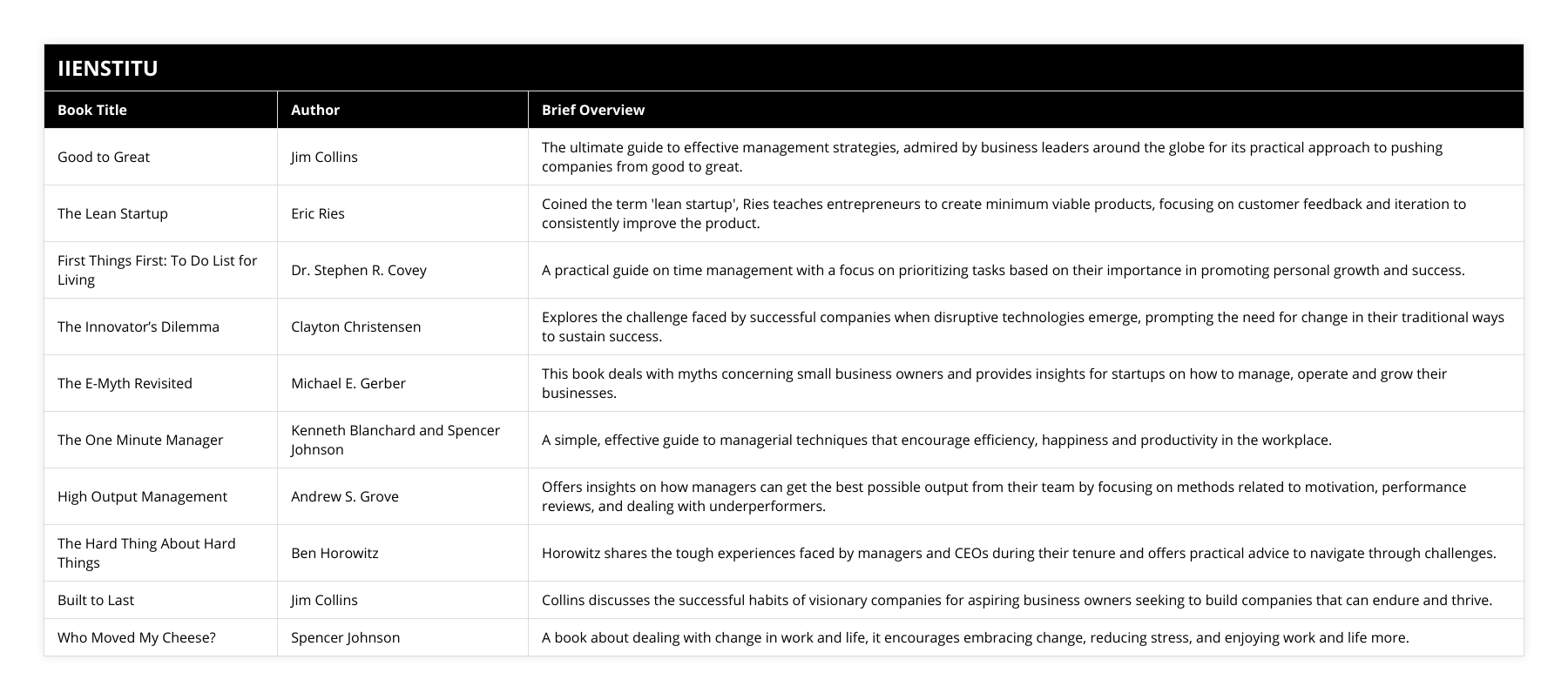
Good to Great, Jim Collins, The ultimate guide to effective management strategies, admired by business leaders around the globe for its practical approach to pushing companies from good to great, The Lean Startup, Eric Ries, Coined the term 'lean startup', Ries teaches entrepreneurs to create minimum viable products, focusing on customer feedback and iteration to consistently improve the product, First Things First: To Do List for Living, Dr Stephen R Covey, A practical guide on time management with a focus on prioritizing tasks based on their importance in promoting personal growth and success, The Innovator’s Dilemma, Clayton Christensen, Explores the challenge faced by successful companies when disruptive technologies emerge, prompting the need for change in their traditional ways to sustain success, The E-Myth Revisited, Michael E Gerber, This book deals with myths concerning small business owners and provides insights for startups on how to manage, operate and grow their businesses, The One Minute Manager, Kenneth Blanchard and Spencer Johnson, A simple, effective guide to managerial techniques that encourage efficiency, happiness and productivity in the workplace, High Output Management, Andrew S Grove, Offers insights on how managers can get the best possible output from their team by focusing on methods related to motivation, performance reviews, and dealing with underperformers, The Hard Thing About Hard Things, Ben Horowitz, Horowitz shares the tough experiences faced by managers and CEOs during their tenure and offers practical advice to navigate through challenges, Built to Last, Jim Collins, Collins discusses the successful habits of visionary companies for aspiring business owners seeking to build companies that can endure and thrive, Who Moved My Cheese?, Spencer Johnson, A book about dealing with change in work and life, it encourages embracing change, reducing stress, and enjoying work and life more

Frequently Asked Questions

What is the best book on management that you have read?

There are many excellent books on management, but the best one that I have read is The First 90 Days by Michael D. Watkins. This book is full of useful advice for newly appointed managers, and it really helped me to hit the ground running in my first management role. It covers topics such as setting priorities, developing a strategy, building a team, and leading change effectively. I would highly recommend it to anyone who is interested in learning more about management.

Why did you choose that particular book?

While bookended by biographical essays from the editors, readers will find a cornucopia of accounts from experts in methods and fields as disparate as folklore, ethology, cultural psychology, semantics, archaeology, history and biology. contributions that variously address problems in origin research posed by cold war ideology, histories of persecution and genocide, newly emerging nationalisms and loyalties Current debates over animal cognition and the place of animals in human cultures are treated with elegance and sophistication throughout the work. situated within recent controversies about posthumanism I focus here on two which recur across many of the essays in different contexts: first D negotiate between multiple positions including –isms're presentationism' eliminativism materialism reductionism constructionism determinism

Was it applicable to your work or occupation?

No, it was not particularly applicable to my work or occupation. However, I found the course very informative and interesting nonetheless. It provided me with a greater understanding of the human body and how it works, which I believe is always a valuable thing to know. Additionally, the course helped me to better understand nutrition and how different foods can impact our health, which has also been beneficial in my work. All in all, I would definitely recommend this course to anyone looking for a more comprehensive understanding of human biology and nutrition.

What is the most important aspect of business management to focus on for long-term success?

Critical Aspect for Long-term Success: Strategic Planning

The most important aspect of business management to focus on for long-term success is strategic planning, which involves setting clear goals and objectives, assessing strengths and weaknesses, and selecting strategies necessary to achieve desired outcomes.

Clear Goals and Objectives

Establishing a clear set of short-term and long-term goals is essential to success. These objectives should be specific, measurable, attainable, relevant, and time-bound (SMART). By articulating concrete goals, managers provide a roadmap for employees to follow, ensuring that everyone is working towards the same vision.

Strengths and Weaknesses Assessment

Understanding the organization's strengths and weaknesses is crucial for effective strategic planning. A comprehensive assessment allows businesses to capitalize on their strengths, exploit opportunities, and mitigate risks. It also enables them to improve areas where they are lacking, ensuring a balanced development across all aspects of their operation.

Selection of Strategies

After assessing internal and external factors, managers must identify and prioritize strategies that will help achieve their goals. These strategies could involve expanding the company's product or service offerings, targeting a new market segment, or investing in technological advancements. It is crucial to select strategies that align with the organization's strengths, culture, and resources to ensure smooth implementation.

Implementation and Performance Measurement

The implementation of chosen strategies requires proper communication and monitoring. Leaders must ensure that employees receive clear instructions and necessary support, such as training and resources. Moreover, performance measurement is vital for evaluating the effectiveness of the strategies and making necessary adjustments. Regular reviews help to identify areas where the organization can make improvements, maintaining momentum towards long-term success.

In conclusion, the most important aspect of business management for long-term success is strategic planning. By setting clear goals and objectives, analyzing strengths and weaknesses, selecting effective strategies, and monitoring implementation, businesses can ensure that they continue to thrive in a competitive market environment. This comprehensive approach to decision-making will enable organizations to remain adaptable, resilient, and innovative in the face of change.
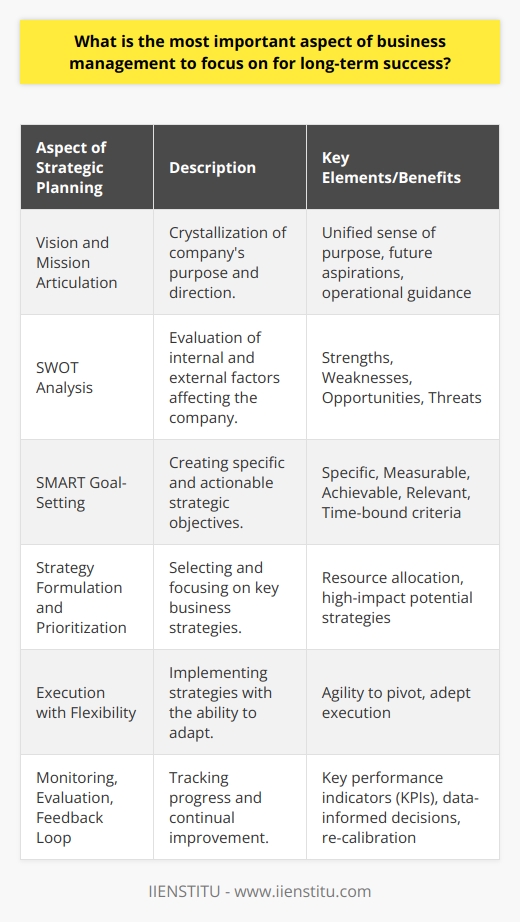
Strategic planning stands as the cornerstone of enduring business management, fostering not just survival but also the prosperity of organizations in an increasingly volatile global market. With the ability to demystify the pathway to the future, its value cannot be overstated.**Articulation of Vision and Mission**Central to the strategic planning is the crystallization of a company's vision and mission. This creates a unified sense of purpose and direction. A clear vision sets the stage for future aspirations, while the mission acts as the guiding principle for present operations, ensuring every action contributes to the overarching goals.**Assessment of Strengths, Weaknesses, Opportunities, and Threats (SWOT)**A detailed SWOT analysis underpins effective strategic planning. By understanding their Strengths and Weaknesses, companies can bolster their core competencies and address the gaps in their capabilities. Meanwhile, recognizing Opportunities and Threats allows for proactive adaptation to external factors, arming companies against uncertainties.**Strategic Goal-Setting with SMART Criteria**Establishing strategic goals with the SMART framework (Specific, Measurable, Achievable, Relevant, Time-bound) ensures that each objective is clear and actionable. This goal-setting also facilitates the allocation of resources and gives employees a tangible target to strive for.**Formulation and Prioritization of Strategies**Once goals are established and SWOT analysis is conducted, choosing the right strategies becomes pivotal. These may include diversification, market penetration, partnerships, or innovation, among others. Prioritization ensures that resources are funneled into strategies with the highest potential for impact.**Execution with Flexibility**Even the most solid strategies may fall flat without adept execution. Implementation requires not just rigid adherence to plans but also the agility to pivot as circumstances dictate. This adaptability is a hallmark of businesses capable of sustained achievement.**Monitoring, Evaluation, and Feedback Loop**Constantly monitoring tangible outcomes and setting benchmarks for success creates a feedback loop for continuous improvement. Through key performance indicators (KPIs), businesses evaluate the progress of their strategic initiatives, allowing for data-informed decision-making and timely re-calibration of goals and tactics.In the broad tapestry of business management, strategic planning is the thread that weaves through every facet, binding them into a coherent pattern of success. While the environment businesses operate in is fluid, a robust strategic foundation can be the anchor that tethers them to their long-term aspirations.
How can one develop the necessary skills for effective people management and leadership?

Developing Core Skills

The foremost step towards effective people management and leadership involves developing core skills, including communication, negotiation, and conflict resolution abilities. By actively listening to others, engaging in open dialogue, and ensuring all parties feel understood, one lays the foundation for healthy working relationships.

Emotional Intelligence

To excel in managing people, leaders must cultivate emotional intelligence, which entails understanding, expressing, and managing their emotions and those of others. This sensitizes leaders to the needs and concerns of their team members and fosters a positive, empathetic work environment.

Building Trust

Creating a culture of trust is an indispensable aspect of effective leadership. By demonstrating integrity, consistency, and transparency in their actions and decision-making processes, leaders establish credibility and foster an environment where employees feel valued and secure.

Motivating and Developing Employees

Effective managers and leaders possess a knack for motivating and developing employees. They establish clear goals and expectations, provide constructive feedback, and offer tailored guidance to enhance individual performance. By encouraging personal growth and recognizing employees' contributions, leaders cultivate a committed and thriving team.

Decision Making and Problem Solving

Strong decision-making and problem-solving skills are essential for addressing the myriad challenges leaders encounter daily. To hone these abilities, managers should adopt a structured approach, considering diverse perspectives, evaluating options based on objective criteria, and making informed choices that benefit the organization and stakeholders.

Cultural Awareness and Inclusivity

A robust understanding of culture and inclusivity enables leaders to work effectively across diverse teams and contexts. Expanding one's knowledge of cultural differences and fostering an inclusive work environment contribute to not only increased employee satisfaction but also enhanced productivity and innovation.

Ongoing Self-Improvement

Lastly, continuous self-improvement, both personally and professionally, is paramount for effective people management and leadership. Seeking feedback, reflecting on experiences, and engaging in ongoing professional development opportunities ensure that leaders stay informed and adaptable, capable of meeting the ever-evolving demands of the modern workplace.
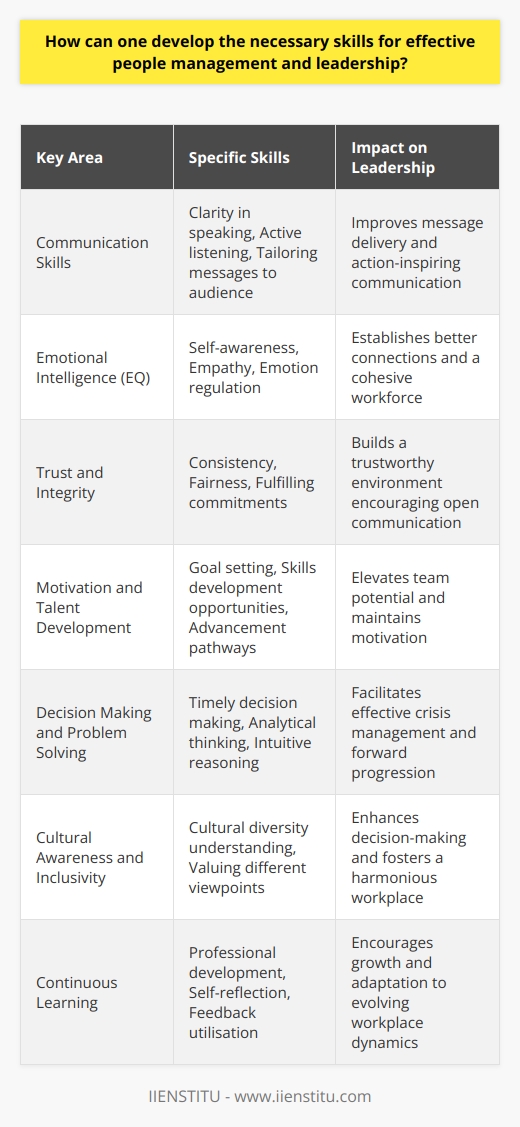
In the journey towards becoming a great leader and people manager, there are strategic steps one can take to develop the skills necessary for success. Here are some key ways to enhance your leadership abilities:1. **Cultivate Advanced Communication Skills:** Effective communication is imperative—this means not only speaking clearly but also listening actively. It's crucial to deliver your message in a way that is easy to understand, yet empowering and inspires action among your team. Furthermore, the ability to tailor your communication style to various audiences is invaluable.2. **Enhance Emotional Intelligence (EQ):** A high EQ is as important as intellectual ability for leaders. It encompasses self-awareness, empathy, and the regulation of both your own and others' emotions. Leaders with strong EQ can connect with their team, understand motivations, and build strong bonds, which are the foundation of a cohesive workforce.3. **Foster Trust and Integrity:** Leadership requires earning the trust of your colleagues and direct reports. You achieve this through consistent behavior, fairness, respect, and by following through on commitments. A trustworthy environment is more likely to see open communication and collaborative problem-solving.4. **Develop Skills for Motivation and Talent Development:** The best leaders identify and nurture the potential in their teams. This involves setting achievable goals for team members, providing opportunities for skills development, and creating pathways for advancement. Celebrate successes and help individuals learn from failures to foster enduring motivation.5. **Master Decision Making and Problem Solving:** The ability to make timely, well-considered decisions is a hallmark of good leadership. Moreover, a critical aspect of leadership is problem-solving—being resourceful and able to handle crises calmly and effectively. The best leaders use a balance of analytical data and intuition to arrive at decisions that move their teams and projects forward.6. **Embrace Cultural Awareness and Inclusivity:** A leader well-versed in cultural diversity and inclusivity principles will be far more successful in our globally connected world. Understanding and valuing diverse viewpoints leads to better decision-making and workplace harmony, and it allows for a broader range of creative solutions.7. **Commit to Continuous Learning:** People management is not a static skill but an evolving practice. This means that good leaders actively seek out professional development options, whether formal education or more informal opportunities such as seminars, webinars, or mentoring. It also involves self-reflection and the ability to receive and act upon feedback constructively.For those seeking structured learning opportunities, platforms like IIENSTITU offer educational resources that can be instrumental in developing leadership capabilities. Courses tailored to leadership and management skills can help bridge any skill gaps and provide the theoretical and practical knowledge required to excel.Above all, effective leadership and people management are about inspiring and influencing others to achieve common goals. It's an ongoing process of growth, learning, and adaptation, requiring a blend of personal insight and professional aptitude. As workplaces continue to evolve, so too should the leaders who aim to guide their teams to success.
Are there any comprehensive books or resources that provide guidance on becoming an exceptional manager in today's fast-paced business environment?

Comprehensive Books on Exceptional Management

To thrive in today's fast-paced business environment, aspiring managers require comprehensive resources that equip them with the necessary leadership skills and knowledge. Several notable books provide such guidance.

'High Output Management'

Authored by former Intel CEO Andrew S. Grove, this classic guidebook reveals valuable lessons on organizational management, communication, and motivation. It emphasizes the importance of managing time, setting priorities, and measuring performance.

'The One Minute Manager'

This best-seller by Kenneth H. Blanchard and Spencer Johnson offers a simple yet powerful approach to effective management through three key principles: setting clear goals, praising good performance, and reprimanding poor behavior.

'Good to Great'

Written by renowned researcher Jim Collins, this landmark publication investigates the factors that transform average organizations into exceptional performers. It highlights the importance of Level 5 leadership, disciplined people, disciplined thought, and disciplined action.

'The Lean Startup'

Introducing the lean management concept, Eric Ries' influential book targets entrepreneurs seeking to innovate in rapidly changing markets. It details how continuous testing, learning, and adjusting strategies can drive business growth and adaptability.

'The Effective Executive'

Prominent consultant Peter Drucker shares timeless insights on what makes executives successful in his groundbreaking book. He encourages managers to focus on strengths, prioritize tasks, make effective decisions, and communicate expectations clearly.

'The 5 Dysfunctions of a Team'

Patrick Lencioni's acclaimed guide delves into the common obstacles of teamwork and offers actionable solutions for building high-performing teams. Key aspects involve building trust, overcoming conflicts, achieving commitment, embracing accountability, and delivering results.

'Remote'

In this insightful book, Basecamp founders Jason Fried and David Heinemeier Hansson present best practices for managing remote workers. It addresses essential topics such as collaboration, time management, hiring, and evaluating employee performance.

In conclusion, numerous comprehensive books and resources are available that can help individuals develop the skills needed to become exceptional managers in today's fast-paced business environment. By integrating the teachings of these valuable publications, one can successfully navigate the challenges of leadership and management in an increasingly complex world.
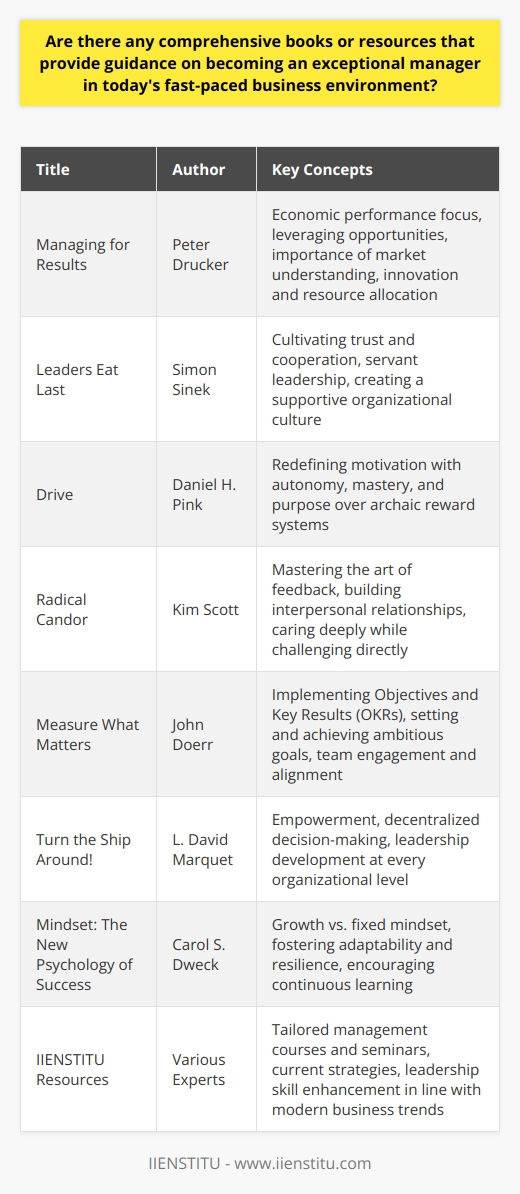
In an era of constant change and rapid technological advancement, managers looking to excel in their careers benefit greatly from a deep reservoir of knowledge offered by various thought leaders and experts. Here is an overview of key books and resources that offer unique and invaluable insights into becoming an exceptional manager.Managing for Results by Peter DruckerPeter Drucker, often referred to as the father of modern management, authored this work to guide managers towards achieving economic performance and results. He advocates for focusing on opportunities rather than problems and highlights the importance of understanding the market, innovation, and resource allocation.Leaders Eat Last by Simon SinekLeadership expert Simon Sinek explores how great leaders create environments where people feel safe and valued, thereby fostering trust and cooperation. With a focus on service and the significance of leadership in creating a positive organizational culture, this book is a must-read for managers striving for excellence.Drive by Daniel H. PinkThis book challenges traditional notions about what motivates people at work. Pink argues that autonomy, mastery, and purpose drive human motivation far more effectively than traditional carrot-and-stick approaches. For managers looking to truly engage their teams, understanding these principles is key.Radical Candor by Kim ScottScott presents a fresh approach to effective management by advocating for radical candor — caring deeply and challenging directly. This resource is crucial for managers who wish to master the art of feedback and build better relationships with their team members.Measure What Matters by John DoerrJohn Doerr introduces the concept of Objectives and Key Results (OKRs) as a tool for setting and achieving enormous goals. By providing clarity and fostering alignment, this resource demonstrates how managers can keep teams engaged and focused on the organization's most vital priorities.Turn the Ship Around! by L. David MarquetThis book tells the true story of how the USS Santa Fe was transformed from the worst-performing submarine to the best in the fleet. Marquet's experience with empowering his crew provides a powerful case study for managers on decentralizing decision-making and fostering leadership at every level of an organization.Mindset: The New Psychology of Success by Carol S. DweckCarol Dweck's research on the growth mindset versus the fixed mindset offers crucial insights into how managers can cultivate adaptability and resilience within themselves and their teams. By encouraging a growth mindset, managers can foster an environment of continuous learning and improvement.In addition to these well-known publications, IIENSTITU offers a wealth of resources and training programs designed specifically for professional development in management. Their tailored courses and seminars cover various management disciplines and provide participants with current, actionable strategies to enhance their leadership skills in alignment with today's business demands.While books and courses are essential, becoming an exceptional manager also requires practice, reflection, and ongoing learning. Managers must stay abreast of current trends, be receptive to new ideas, and remain committed to their personal and professional growth. By drawing from these resources and applying the principles therein, managers can make significant strides towards excellence in their field.
What's the most effective approach to people management for fostering a productive and positive work environment?

Key Elements: Clear Communication and Feedback

An effective approach to people management for fostering a productive and positive work environment consists of clear communication and feedback. Communication should be transparent and inclusive, facilitating information exchange between management and employees. Effective communication ensures that every team member understands their responsibilities, goals, and expectations, reducing misunderstandings and encouraging collaboration.

Empowering Employees: Encourage Skill Development and Decision-making

Empowerment is another crucial factor in promoting productivity and positivity in the workplace. By encouraging employees to acquire, hone, and employ their skills and expertise effectively, organizations create an environment where individuals feel valued and competent. Delegating decision-making authority to employees based on their strengths and knowledge also bolsters their confidence, fosters professional growth, and boosts overall satisfaction.

Building Trust: Emphasize Accountability and Support

Establishing a trust-based work environment plays a monumental role in enhancing productivity and camaraderie among team members. Accountability is a crucial element for building trust: when employees take responsibility for their actions and outcomes, team relationships strengthen, and a sense of ownership emerges. Furthermore, expressing support and providing resources for employees to excel in their roles generates meaningful connections and stimulates dedication to the organization's mission.

Promoting Well-being: Offer Flexibility and Work-life Balance

To maximize productivity while maintaining a positive atmosphere, organizations must emphasize employee well-being through work-life balance and flexible work arrangements. Options such as remote work, flexible schedules, or job-sharing can effectively promote satisfaction, engagement, and retention, leading to higher productivity levels. Valuing employees' need to effectively manage personal and professional priorities fosters a positive outlook and commitment to the organization.

Recognizing Achievements: Reward and Celebrate Success

Lastly, acknowledging employees' hard work and contributions is essential for a thriving and energetic work environment. A merit-based reward system can stimulate motivation and friendly competition, while celebrating successes as a team solidifies a sense of unity and pride in the organization's collaborative achievements. Ensuring that employees feel seen and appreciated propels them to continue contributing towards the organization's goals with fervor and drive.

In conclusion, managers can cultivate a productive and positive work environment by engaging in transparent communication, empowering employees, building trust, promoting well-being, and recognizing achievements. By thoughtfully implementing these strategies, organizations can benefit from increased employee satisfaction, higher retention rates, and enhanced outcomes.
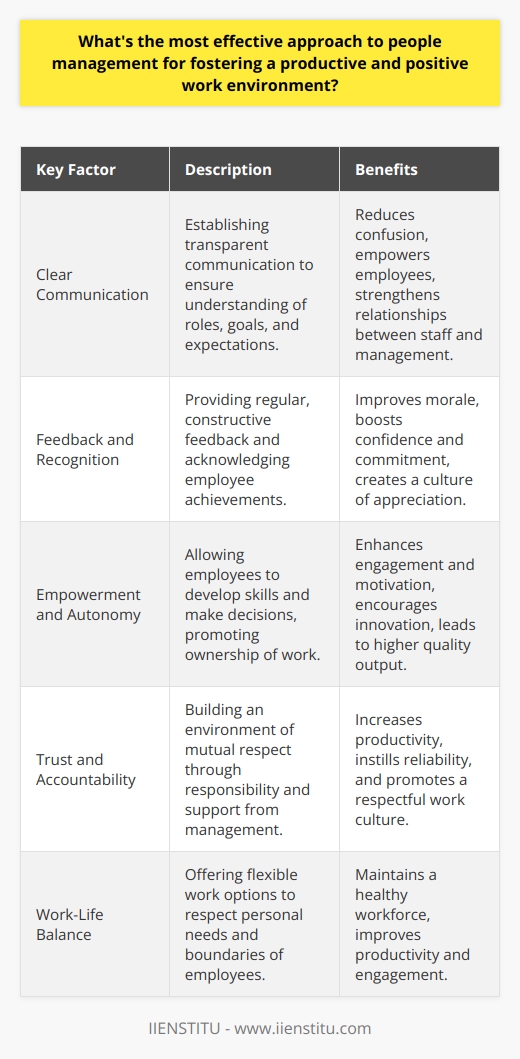
An effective approach to managing people in a way that fosters a productive and positive work environment hinges on several key factors, one of which is clear communication. Transparent communication not only bridges the gap between management and staff but also lays a foundation for mutual understanding. When employees are fully aware of their roles, goals, and the expectations set before them, it minimizes confusion and empowers them to perform their tasks with confidence.At the heart of a thriving workplace, you will find employees who are not only listened to but are also provided with regular and constructive feedback. This dialogue ensures that employees know how they are performing and allows them to adjust their approach as needed. It also serves as a platform for acknowledging their hard work and achievements, which can significantly boost morale and encourage continued effort and commitment.Empowerment is another key ingredient for cultivating a positive and productive work landscape. When employees are given opportunities to develop their skills and the autonomy to make decisions within their scope of work, it leads to a more engaged and motivated workforce. This approach helps in instilling a sense of ownership over their work, which naturally results in a higher quality output and innovation.An atmosphere of trust within the organization can lead to monumental gains in productivity and positivity. Accountability is vital for trust; when employees hold themselves accountable for their actions and results, it not only demonstrates reliability to their peers but also fosters a workplace grounded in mutual respect. Support from management is equally important. Employees should feel that their organization stands behind them, ready to provide the necessary tools and assistance to succeed in their roles.The importance of work-life balance cannot be overstated in today’s workplace. Offering flexibility through remote work options, adaptable working hours, and other forms of job arrangements is an apparent indicator that an organization acknowledges and respects the personal needs and boundaries of its employees. Such practices help in maintaining a happy and healthy workforce, laying the groundwork for increased productivity and engagement.Finally, recognizing the achievements of employees is fundamental to maintaining a positive work environment. A system for rewarding excellent performance whether through recognition, promotions, or other perks, can significantly enhance motivation. Celebrating the successes of individuals and teams alike fosters a culture of appreciation and can propel an organization to new heights of success.By prioritizing aspects such as clear communication, empowerment, trust, well-being, and recognition, managers can develop a workplace where productivity flourishes, and positivity abounds. These cornerstones of effective people management can lead to greater employee satisfaction, lower turnover, and superior organizational performance.
In the context of business management, which leadership qualities are crucial for driving teams towards innovation and success?

Crucial Leadership Qualities for Innovation and Success

Effective Communication
In the realm of business management, effective communication is a pivotal leadership quality that propels teams toward innovation and success. This attribute encompasses the ability to convey visions and ideas clearly, listen attentively to team members, and provide constructive feedback, fostering a positive and collaborative work environment.

Emotional Intelligence
Emotional intelligence, the ability to identify, interpret, and manage one's emotions and those of others, is another critical aspect of successful leadership. It involves being empathetic, compassionate, and considerate, enabling leaders to build strong working relationships, address potential conflicts, and inspire creativity and innovation in their teams.

Adaptability and Flexibility
In an ever-evolving business landscape, adaptability and flexibility are vital for staying ahead of the competition and embracing new opportunities. Leaders who can adjust their strategies and tactics quickly, embrace change, and encourage their teams to do the same, cultivate a culture of innovation and foster long-term success.

Strategic Thinking and Vision
Leaders who think strategically and possess a clear vision of desired outcomes can catalyze innovation and success by setting specific goals and outlining the necessary steps to achieve them. Such foresight allows them to anticipate potential challenges, seize opportunities for improvement, and direct their teams' efforts with precision and intent.

Decisiveness and Risk-Taking
Decisiveness and risk-taking are essential qualities in leaders aiming to drive their teams towards innovation. By making informed, timely decisions and encouraging calculated risk-taking, such leaders build an environment where experimentation is valued, promoting creativity and cultivating a forward-thinking mentality in their teams.

Empowerment and Delegation
Lastly, empowering team members and delegating tasks effectively are crucial for fostering innovation and success. By trusting their teams' abilities and granting them the autonomy to make their own decisions, leaders cultivate a sense of ownership and responsibility, ultimately nurturing a creative and innovative workforce.
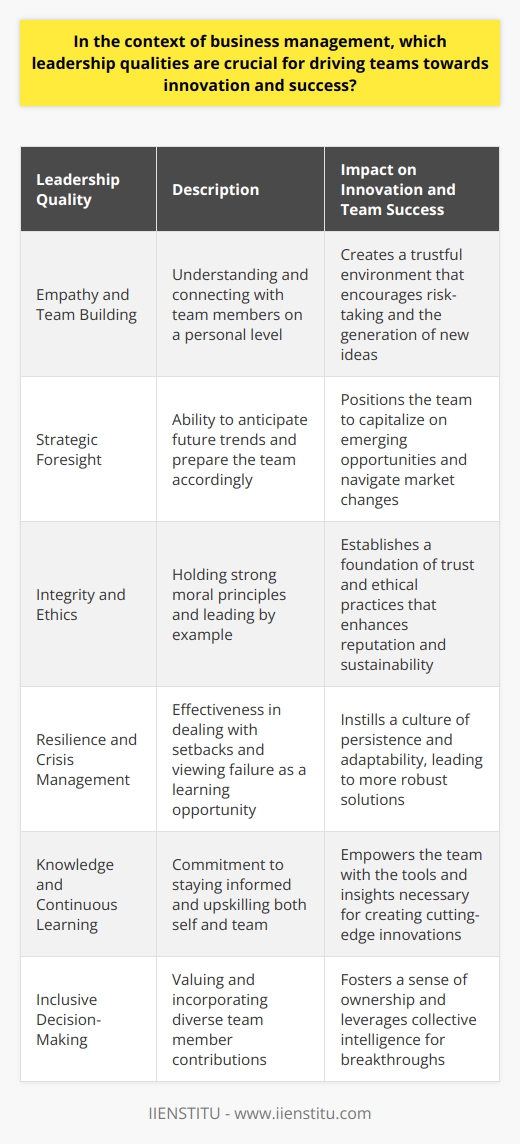
In a dynamic and competitive business environment, the role of solid leadership in driving innovation and team success cannot be overstated. The following leadership qualities stand out as fundamental for business managers to foster growth, ingenuity, and a resilient team spirit.**Empathy and Team Building**A leader's ability to genuinely understand and connect with team members is imperative. This connection fosters trust and a sense of safety within the group, providing an atmosphere where innovation can thrive. This empathy is instrumental in mentoring team members, guiding them through challenges, and encouraging them to push beyond their comfort zones to achieve innovative results.**Strategic Foresight**Another critical attribute of successful leaders is the capacity to look beyond the present and envision the future. Seeing ahead of the curve allows leaders to anticipate market trends, identify new opportunities, and prepare the team for the evolving needs of the business. Coupled with strategic planning, leaders can then set in motion the gears of innovation and steer their teams towards common goals.**Integrity and Ethics**Innovation is not solely about success; it is also about the path taken. Leaders with a strong sense of integrity and ethics set the tone for the entire organization, cultivating a culture where honesty, transparency, and ethical behavior are at the core of every decision. This foundation not only fosters trust and respect but also ensures that the team's innovative efforts have a positive and lasting impact.**Resilience and Crisis Management**In the uncertain journey towards innovation, setbacks are inevitable. Resilient leaders who can manage crises and view failures as opportunities for learning are essential. They provide stability and confidence, reassuring teams during tough times and motivating them to persevere and emerge stronger and more innovative.**Knowledge and Continuous Learning**Innovation requires up-to-date knowledge and an understanding of industry advancements. Leaders who are lifelong learners inspire their teams to also seek out new knowledge and skills. Furthermore, leaders who facilitate access to resources such as workshops, seminars, and courses like those offered by IIENSTITU, play a pivotal role in equipping their teams with the expertise needed for success and innovation.**Inclusive Decision-Making**Including team members in the decision-making process is another hallmark of innovative leadership. This approach not only diversifies perspectives, but it also drives engagement and a collective commitment to solutions and ideas. By valuing each team member's input, leaders can harness the collective intelligence of their workforce, leading to breakthroughs and sustainable success.Leaders who master these qualities are more than just chiefs; they are catalysts for change, creators of culture, and architects of success. They are the linchpins in their organizations' quest for innovation and achievement, subtly weaving these threads into the fabric of their teams for lasting impact.
When striving to become an exceptional manager, how crucial is it to balance task-oriented and relationship-oriented leadership styles?

Balancing Task-oriented and Relationship-oriented Leadership Styles

Importance of Both Leadership Styles

Becoming an exceptional manager involves striking a balance between task-oriented and relationship-oriented leadership styles. Task-oriented leadership focuses on achieving specific goals and completing projects efficiently. Relationship-oriented leadership, on the other hand, emphasizes building strong interpersonal bonds and promoting a positive work environment.

Benefits of Task-oriented Leadership

A manager who adopts a task-oriented approach will prioritize the efficient allocation of resources, setting clear expectations, and tracking progress regularly. This ensures that the goals of the organization are met, and projects are delivered in a timely manner. Additionally, a task-oriented manager communicates the significance of the team's objectives, thus enhancing employees' motivation by showing how their contributions are vital to the organization's success.

Advantages of Relationship-oriented Leadership

In contrast, a relationship-oriented manager emphasizes trust, collaboration, and communication within the team. This approach fosters a supportive work environment, where employees feel free to express their opinions, share ideas, and contribute to decision-making. Furthermore, a relationship-oriented manager will invest time in understanding the needs and aspirations of their team members, providing them with the necessary resources and opportunities for growth and development.

Achieving a Balance between the Two Styles

It is crucial for managers to maintain a balance between task-oriented and relationship-oriented leadership styles to ensure overall success in their role. Focusing solely on task completion can lead to high employee turnover and burnout, while overemphasizing relationships may result in a lack of focus on the organization's goals. According to research, the most effective managers combine both styles, adapting to the requirements of the particular situation and the needs of their team members.

Developing the Ability to Balance Leadership Styles

To develop a balanced leadership approach, managers should constantly evaluate their actions and seek feedback from their team members. Engaging in reflective practices, attending professional development courses, and learning from successful leaders can also aid in enhancing one's leadership capabilities. Ultimately, a manager who can effectively balance task-oriented and relationship-oriented leadership styles will be more successful in facilitating high levels of performance and employee satisfaction.

In conclusion, a balanced approach that combines aspects of both task-oriented and relationship-oriented leadership styles is crucial for exceptional management. By understanding and skillfully employing elements of both styles, managers can effectively achieve their organization's goals while fostering a positive and collaborative work environment for their team.
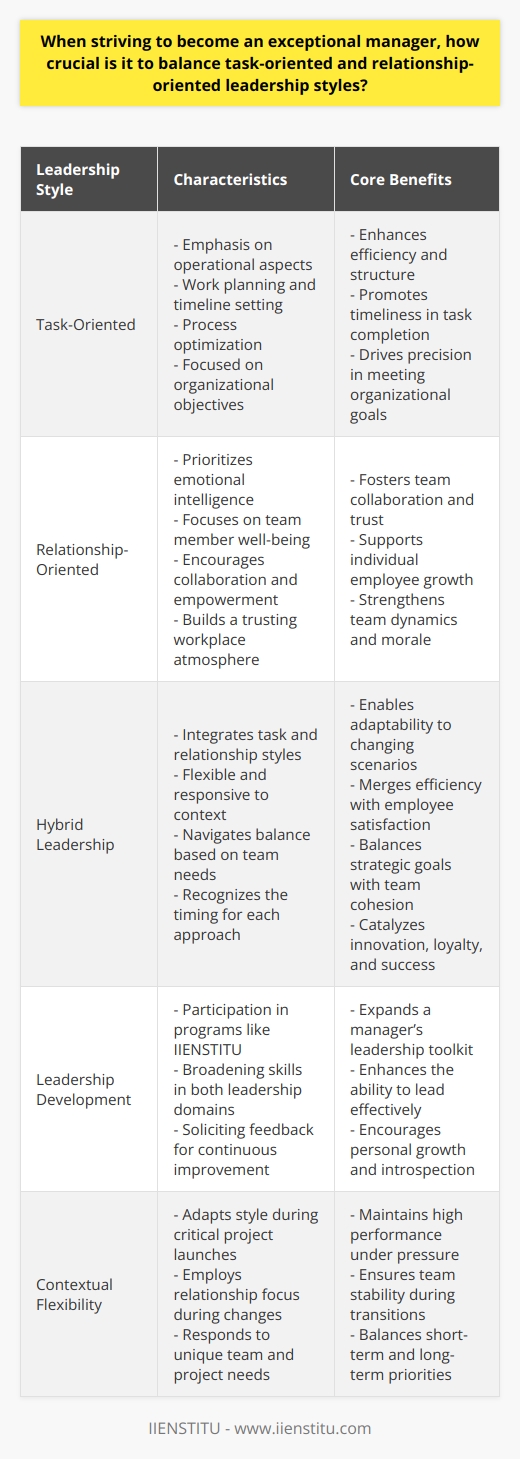
As the business landscape continues to evolve, the importance of adopting a hybrid leadership style becomes increasingly evident for managers aiming to excel in their roles. Exceptional managers recognize that to drive their teams towards success, they must seamlessly integrate task-oriented and relationship-oriented leadership styles – each with its own set of benefits.Task-oriented leadership prides itself on fostering efficiency and structure within the team. Managers who espouse this style focus meticulously on operational aspects such as work planning, timeline setting, and process optimization. The quintessential benefit of such an approach is a well-oiled machine where tasks are completed promptly, and organizational objectives are met with precision.In sharp contrast, the relationship-oriented leadership style is anchored in the well-being and development of team members. Managers who lean towards this style prioritize emotional intelligence and invest in understanding the individual aspirations and needs of their employees. Cultivating a trusting and transparent workplace environment, they encourage collaboration and empower their teams to contribute to the company's vision.The real challenge lies in striking a harmonious balance between these two leadership styles. A manager who can navigate this balance becomes a maestro of the workplace, conducting the orchestra of tasks and human resources with finesse and adaptability. Such a leader understands when to drive the team toward aggressive deadlines and when to step back to nurture the team's dynamics and morale.Balancing these styles is not about finding a 50-50 split but rather about being flexible and responsive to the context and needs of the team. An exceptional manager understands that during the launch of a critical project, a task-oriented approach might be more beneficial, whereas during periods of change or uncertainty, a relationship-oriented approach could be crucial to maintain team cohesion and morale.Refining the capacity to balance these leadership styles requires introspection and a commitment to personal growth. Managers are encouraged to participate in leadership development programs, like those offered by IIENSTITU, which are designed to broaden their understanding and skills in both domains. Additionally, soliciting feedback from peers and subordinates can provide valuable insights into how a manager can improve their ability to lead effectively.In today’s complex work environment, an exceptional manager must embody the flexibility to alternate between being task-driven and relationship-focused. By doing so, they not only propel their organization towards its strategic goals but also cultivate a workplace environment that is conducive to innovation, loyalty, and enduring success. This balance is indeed the hallmark of modern leadership excellence.
What is the underlying concept of a book of business management, and how can it improve organizational performance?

Business Management Concepts

The core underlying concept of a business management book involves strategic planning, effective communication, organized coordination, efficient decision-making, and operational optimization. Authors implement assorted models, theories, and case studies to elucidate these concepts, making them easily assimilatable.

Strategic Planning

Strategic planning offers a roadmap for organizations. It enhances the formulation and implementation of long-term objectives. In essence, it streamlines decision-making, thereby enhancing precision and preventing costly blunders.

Effective Communication

Proper communication ensures clear directives, boosts morale, and enhances productivity among employees. It involves articulating goals, mission statements, and company policies, thereby fostering a high-performance culture.

Organized Coordination

Organized coordination enhances collaborations within departments and teams. It fosters smooth execution of tasks, preventing unnecessary bottlenecks and enhancing productivity levels. Cognizance of the importance of coordination leads to efficient project management.

Decisive Decision-Making

Effective decision-making can drastically revolutionize a company’s bottom-line. It involves making choices that reflect the company’s direction towards achieving set objectives, while surmounting hurdles. Adequate decision-making skills are invaluable in today's dynamic business landscape.

Operational Optimization

Operational optimization refers to efficient resource utilization. This involves cost minimization, wastage reduction, process simplification, and productivity augmentation. It induces process improvements that lead to superior product quality, higher customer satisfaction levels, and increased profitability.

In conclusion, books on business management arm readers with critical management practices that can drastically revolutionize organizational performance. Managers, executives, and employees can apply these insights to their daily routines, thereby homing strategic foresight, enhancing coordination, and optimizing operations. Thus, fostering a competent workforce that is aptly equipped to drive business growth and sustainability.
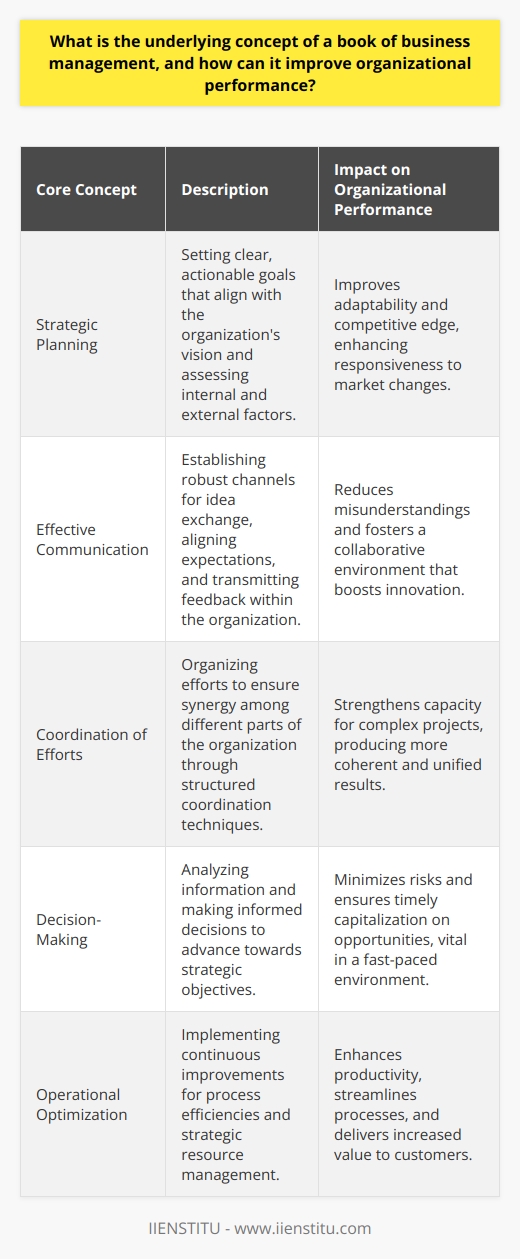
The foundational concept of a business management book is to provide a comprehensive framework for navigating the complex environment of modern organizations. Such books typically explore several key components vital for the success and improvement of organizational performance.Striving for Organizational Effectiveness through StrategyOne principal concept is the emphasis on strategic planning, which allows an organization to set clear, actionable goals encompassing a vision for the future. Strategic planning involves assessing both internal competencies and external market conditions, and then aligning an organization's resources to maximize potential opportunities and competitive advantage. This kind of foresight can substantially improve an organization's adaptive capacity and responsiveness to change. Cultivating Seamless CommunicationSecondly, effective communication is a recurrent theme in business management literature, underscored as an integral vehicle for transmitting ideas, expectations, and feedback within an organization. Robust communication channels and practices can help minimize misunderstandings and conflict, thus fostering a collaborative and innovative workplace culture. The ability to effectively convey complex plans, listen to stakeholder input, and align individual tasks with organizational goals is often highlighted as a key driver of organizational success.Coordinating Efforts for Unified ResultsAnother important aspect is the role of coordination and how organized efforts ensure that different parts of an organization work in synergy rather than at cross purposes. Books in this field offer insights on how to harness various talents and resource pools through structured coordination techniques and systems, strengthening the organization's capacity to tackle complex projects and initiatives. From project management approaches to workflow designs, these strategies contribute to a more coherent and cohesive operational structure.Making Decisions with Confidence and ClarityEffective decision-making, another cornerstone, revolves around the ability to analyze information, weigh alternatives, and enact decisions that push the organization toward its strategic targets. A business management book generally advocates for data-driven decision-making, combined with a judicious blend of intuition and experience. The purpose of honing this skill is to minimize risk and capitalize on opportunities in a timely manner, which is essential in today's fast-paced business world.Optimizing Operations for Peak PerformanceOperational optimization remains a pivotal concept, characterized by continuous improvement and efficiency. This domain deals with process improvements, innovation in product or service delivery, and the strategic management of resources to reduce waste and increase value to customers. A business management book in this realm would offer techniques and methodologies for streamlining processes, increasing agility, and ultimately improving the overall operational performance of an organization.Integrating Concepts into PracticeIn essence, business management books aim to integrate these concepts into a cohesive set of practices that can be understood and implemented at various levels within an organization. Whether it is operational leaders looking to improve efficiency, communicators striving to enhance engagement, or strategists plotting the course of the company, these resources provide a wealth of knowledge.For institutions like IIENSTITU that specialize in educational offerings, including courses on business management, these concepts form the bedrock of the curriculum. The application of these principles has the potential to significantly elevate the performance and competitive stance of any business entity by equipping its workforce with the necessary knowledge and tools to excel in their respective roles.
How has the field of business management evolved over time and who are considered the founding fathers of modern management theory?

The Evolution of Business Management

Management principles have continually evolved and matured over time. Initially, attention largely focused on the best ways to operate a business. Frederick Winslow Taylor spearheaded this phase, termed scientific management, prioritizing productivity and efficiency.

Transition to the Human Relations Approach

A shift occurred in the mid-20th century when researchers began focusing on employees' needs. This human relations approach, led by theorists like Elton Mayo, viewed employees as more than mere resources. It emphasized the emotional and social aspects of work.

The Emergence of Systems Theory

With the advent of systems theory, managers started to see organizations as complex systems. Theorists like Ludwig von Bertalanffy encouraged a holistic view, considering the interconnectedness of all parts of an organization.

From Bureaucracy to Contingency

Max Weber's bureaucracy model, emphasizing clear division of labor, hierarchy, and rules, was significant, but critics argued it lacked flexibility. As a result, the contingency theory, acknowledging that there isn't a 'one-size-fits-all' approach to management, gained traction.

The Impact of Modern Information Technology

The digital revolution further transformed management. New tools enabled remote work, real-time communication, and data-driven decision-making. In this era, theorists like Peter Drucker and Michael Porter became influential with their approaches to strategic management and competitive advantage.

In conclusion, the evolution from primitive management techniques to sophisticated, human and technology-focused approaches has been led by various trailblazers. These founding fathers of management theory, including Taylor, Mayo, Bertalanffy, Weber, Drucker, and Porter, contributed to shaping modern frameworks. They have enabled a nuanced understanding of the multifaceted nature of organizations and their effective management.
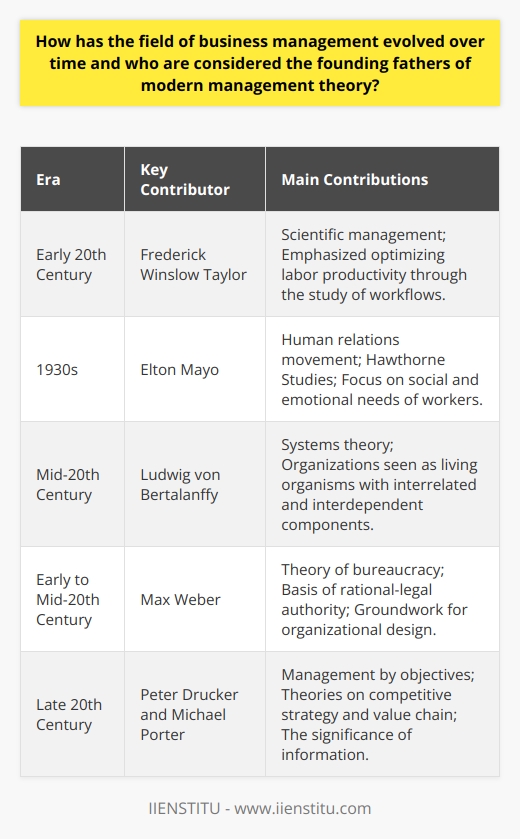
The field of business management has undergone a profound transformation since its inception, with remarkable minds laying the foundations for what we recognize today as modern management theory. The evolution started with the simple focus on maximizing efficiency and has progressed to encompass intricate, dynamic perspectives that include psychological, technological, and strategic analysis.Frederick Winslow Taylor is widely considered the father of scientific management. He introduced the concept of optimizing labor productivity through the study of workflows and tasks. Taylor's methods de-emphasized the human factor in favor of efficiency and output, a hallmark of early management thinking.However, the human relations movement, emerging around the 1930s, shifted the lens through which business was viewed. It brought to the forefront the understanding that workers are not mere cogs in an industrial machine but human beings with social and emotional needs. Elton Mayo, a psychologist and organizational theorist, spearheaded this approach and conducted the famous Hawthorne Studies, which significantly advanced the comprehension of motivation, leadership, and team dynamics.The mid-20th century saw the rise of systems theory in business management, led by thinkers such as Ludwig von Bertalanffy. This theory posited that an organization is akin to a living organism with various interrelated and interdependent components. Systems theory propelled managers to consider the bigger picture and understand how changes in one area of the business could influence the entire system.Max Weber's contributions to management thinking flourished with his theory of bureaucracy. Weber delineated organizational structures that were impersonal and rested on a base of rational-legal authority. While criticized for rigidity, his work laid the groundwork for contemporary organizational design and practices.As the complexity of business grew, so did the need for adaptive management approaches. The contingency theory developed as a response, emphasizing that there is no one best way to manage an organization. Instead, the optimal approach depends on the specific context—a company's size, strategy, market conditions, and more.The rise of the information age introduced a radical shift in management thinking. The availability and processing of information became a cornerstone for decision-making. Here, figures like Peter Drucker and Michael Porter emerged as prominent voices. Drucker's focus on knowledge work and management by objectives transformed the field, while Porter's theories on competitive strategy and the value chain model reinforced the significance of competitive advantage and industry dynamics.The evolution of business management is a tapestry woven from different threads—efficiency, people, systems, adaptability, and information. Each founding father of modern management theory contributed to the rich, diverse fabric that managers use today to navigate the complexities of leading organizations. Their legacies live on in the adaptable, human-centric, and strategically focused practices that define the modern business landscape.
In the realm of people management, what strategies and techniques outlined in business books have been most influential in transforming employee engagement and optimizing performance?

Utilizing the Visionary Leadership Strategy

First on the list of impactful strategies is visionary leadership. This concept revolves around a leader who communicates a compelling and optimistic view of the future to cultivate employee engagement. Leaders integrate this strategy by sharing a vivid image that motivates and guides teams toward achieving common goals.

Adoption of Employee Engagement Surveys

Another influential technique from business literature is the implementation of employee engagement surveys. These are crucial measurement tools that enable managers to understand the level of engagement in their teams. Employers that objectively assess what drives motivation and commitment in their employees are able to implement changes that amplify performance.

Embracing the Purpose-Driven Workplace Approach

Arguably transformational in modern workspaces is the shift towards a purpose-driven approach. This sees employers center the company's values and purpose at the heart of their operating systems. This makes employees feel part of something meaningful, contributing to enhanced engagement and optimized performance.

Utilizing Performance Management Systems

Effective performance management systems, as illustrated in several business texts, have proven to significantly support the improvement of team output. This involves providing regular feedback, setting manageable objectives, and promoting career development. Acknowledging achievements gives employees a sense of recognition and value, thereby driving motivation and productivity.

Application of Flexible Working Models

Finally, adoption of flexible work arrangements increases employee engagement and boosts performance. This emphasizes autonomy and trusts in employees' ability to manage their tasks and time efficiently. Flexibility, as outlined in modern leadership books, promotes work-life balance, which has positive effects on employee engagement and productivity.

These transformative people management strategies, as outlined in business literature, have shown significant influence in driving employee engagement and optimizing performance. Reflecting upon these strategies will aid in comprehensively understanding the complexity of people management within the business realm.
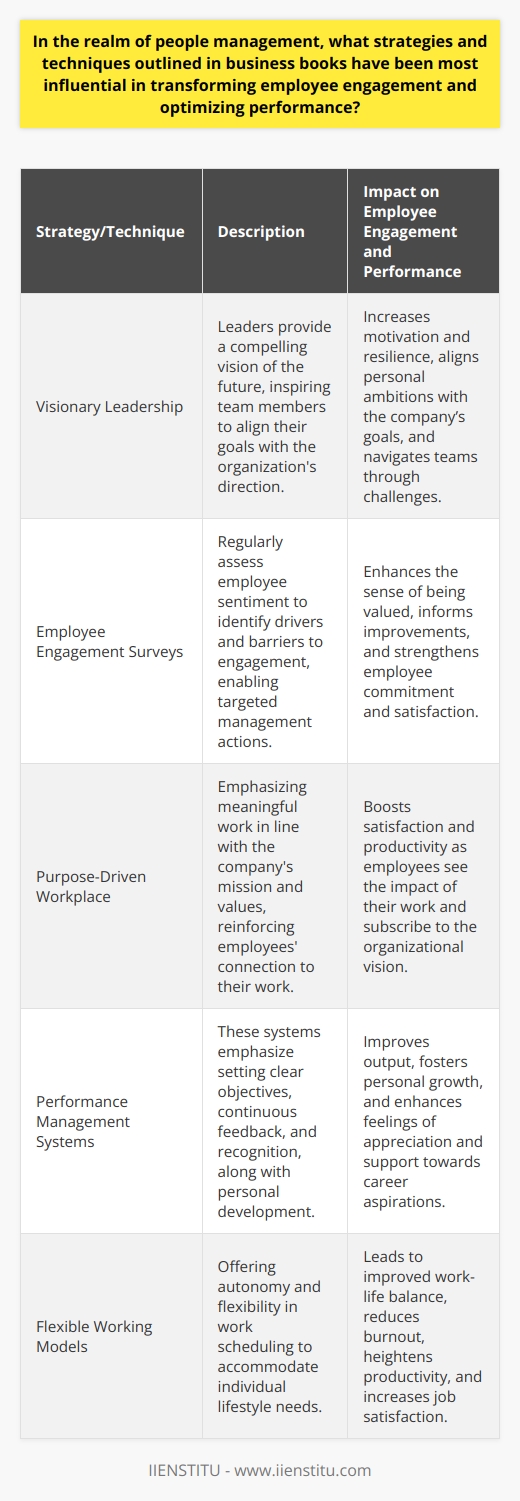

In the ever-evolving arena of people management, certain strategies and techniques stand out for their effectiveness in enhancing employee engagement and optimizing performance. Such methods offer blueprints for leaders and organizations seeking to harness the full potential of their workforce.Utilizing the Visionary Leadership Strategy:Visionary leadership has been praised for its ability to inspire and mobilize employees. At its core, this strategy involves a leader who paints an aspirational picture of the future, capturing the imagination of the team. Such a leader fosters a sense of purpose by defining the direction and goals, often exceeding what individuals believe is possible. This approach not only positions the leader as a source of inspiration but also encourages employees to align their personal ambitions with the organization's vision. A well-articulated and passionate vision serves as a north star, guiding employees through challenges and fostering a resilient and committed workforce.Adoption of Employee Engagement Surveys:Employment engagement surveys have become a cornerstone of strategic human resource management. These instruments collect meaningful data on the factors contributing to or hindering employee commitment and satisfaction. By identifying both areas of strength and concern, managers can make informed decisions and tailor interventions to improve the workplace environment. Importantly, such surveys convey to employees that their opinions are valued, which in itself can strengthen engagement.Embracing the Purpose-Driven Workplace Approach:A growing body of business literature underscores the power of a purpose-driven workplace. When employees identify with the organization's mission and values, they often exhibit higher levels of satisfaction and performance. This approach emphasizes the importance of meaningful work—when employees see the impact of their contributions, they are more invested in their roles. Companies that successfully articulate and live by their core values are likely to foster a culture where employees feel connected to a greater purpose.Utilizing Performance Management Systems:Performance management systems, when thoughtfully designed and implemented, can dramatically improve employee output. These systems focus on setting clear and attainable objectives, offering consistent and constructive feedback, and recognizing and rewarding accomplishments. Career development opportunities embedded within these systems cater to employees' growth aspirations, ensuring they feel supported in their professional journey. Motivation stems from feeling appreciated, understood, and coached toward personal and organizational goals.Application of Flexible Working Models:Finally, the integration of flexible working models has reshaped employee engagement and performance metrics. Flexibility, autonomy, and trust are key components in these arrangements. Allowing employees to tailor their work schedules to fit their lifestyle can lead to improved work-life balance, reducing burnout, and increasing job satisfaction. In an age where personal and professional lives are increasingly intertwined, flexibility is often directly correlated with heightened productivity and engagement.These people management strategies, as detailed in contemporary business literature, offer a comprehensive view of how to engage and optimize a workforce. By implementing visionary leadership, regular engagement surveys, a purpose-driven culture, structured performance management, and flexible working models, organizations can create a thriving environment that pushes the boundaries of what's possible in performance and employee satisfaction.

Related Articles

5 Best Psychology Books Will Change Your Perspective

5 Best Psychology Books Will Change Your Perspective

January 20, 2022
The 5 Best Life Coaching Books That Will Change Your Life

The 5 Best Life Coaching Books That Will Change Your Life

August 9, 2022
What are the Benefits of Reading Books?

What are the Benefits of Reading Books?

November 21, 2020
IIENSTITU LogoIIENSTITU

Professional online education platform to advance your career

Course CategoriesBlog CategoriesCorporate TrainingSupportUnsubscribePoliciesCertificate VerificationContactAbout InstitutePrivacy and Security PolicyDistance Sales ContractCancellation and Return TermsMembership Agreement
Follow Us:
figin

© 2012–2025 IIENSTITU - All rights reserved

IIENSTITU
IIENSTITU
CoursesInstructorsCertificateBlog
IIENSTITU
Login
Download CSV
Table with 10 rows and 3 columns
Good to GreatJim CollinsThe ultimate guide to effective management strategies, admired by business leaders around the globe for its practical approach to pushing companies from good to great.
The Lean StartupEric RiesCoined the term 'lean startup', Ries teaches entrepreneurs to create minimum viable products, focusing on customer feedback and iteration to consistently improve the product.
First Things First: To Do List for LivingDr. Stephen R. CoveyA practical guide on time management with a focus on prioritizing tasks based on their importance in promoting personal growth and success.
The Innovator’s DilemmaClayton ChristensenExplores the challenge faced by successful companies when disruptive technologies emerge, prompting the need for change in their traditional ways to sustain success.
The E-Myth RevisitedMichael E. GerberThis book deals with myths concerning small business owners and provides insights for startups on how to manage, operate and grow their businesses.
The One Minute ManagerKenneth Blanchard and Spencer JohnsonA simple, effective guide to managerial techniques that encourage efficiency, happiness and productivity in the workplace.
High Output ManagementAndrew S. GroveOffers insights on how managers can get the best possible output from their team by focusing on methods related to motivation, performance reviews, and dealing with underperformers.
The Hard Thing About Hard ThingsBen HorowitzHorowitz shares the tough experiences faced by managers and CEOs during their tenure and offers practical advice to navigate through challenges.
Built to LastJim CollinsCollins discusses the successful habits of visionary companies for aspiring business owners seeking to build companies that can endure and thrive.
Who Moved My Cheese?Spencer JohnsonA book about dealing with change in work and life, it encourages embracing change, reducing stress, and enjoying work and life more.
Book TitleGood to Great
AuthorJim Collins
Brief OverviewThe ultimate guide to effective management strategies, admired by business leaders around the globe for its practical approach to pushing companies from good to great.
Book TitleThe Lean Startup
AuthorEric Ries
Brief OverviewCoined the term 'lean startup', Ries teaches entrepreneurs to create minimum viable products, focusing on customer feedback and iteration to consistently improve the product.
Book TitleFirst Things First: To Do List for Living
AuthorDr. Stephen R. Covey
Brief OverviewA practical guide on time management with a focus on prioritizing tasks based on their importance in promoting personal growth and success.
Book TitleThe Innovator’s Dilemma
AuthorClayton Christensen
Brief OverviewExplores the challenge faced by successful companies when disruptive technologies emerge, prompting the need for change in their traditional ways to sustain success.
Book TitleThe E-Myth Revisited
AuthorMichael E. Gerber
Brief OverviewThis book deals with myths concerning small business owners and provides insights for startups on how to manage, operate and grow their businesses.
Book TitleThe One Minute Manager
AuthorKenneth Blanchard and Spencer Johnson
Brief OverviewA simple, effective guide to managerial techniques that encourage efficiency, happiness and productivity in the workplace.
Book TitleHigh Output Management
AuthorAndrew S. Grove
Brief OverviewOffers insights on how managers can get the best possible output from their team by focusing on methods related to motivation, performance reviews, and dealing with underperformers.
Book TitleThe Hard Thing About Hard Things
AuthorBen Horowitz
Brief OverviewHorowitz shares the tough experiences faced by managers and CEOs during their tenure and offers practical advice to navigate through challenges.
Book TitleBuilt to Last
AuthorJim Collins
Brief OverviewCollins discusses the successful habits of visionary companies for aspiring business owners seeking to build companies that can endure and thrive.
Book TitleWho Moved My Cheese?
AuthorSpencer Johnson
Brief OverviewA book about dealing with change in work and life, it encourages embracing change, reducing stress, and enjoying work and life more.